IP or Analogue Cameras for a UAE Site in 2026
For almost every new installation in Dubai in 2026, the answer is IP. SIRA's Preventive Systems Manual, approved by Administrative Resolution No. (13) of 2025, writes its whole camera chapter under the heading "Digital Systems Specifications (IP)" and asks for recorders that support ONVIF and RTSP, both of which are network protocols. Analogue HD over coax still earns a place in one situation: a large site where long coax runs already exist and pulling new cable would cost more than the cameras.
What follows is how to tell which of those two sites you have. It is read from SIRA's 140 page English translation of the manual, from Cisco, D-Link and Dahua product documentation, and from the ONVIF profiles page, all opened on 28 September 2026. SIRA notes that the Arabic text of the manual prevails if the two versions conflict.
What "analogue" means in a 2026 quotation
The analogue camera in a current quote is not the grainy standard definition box from a 2010 villa install. HD-TVI, HD-CVI and AHD cameras send high definition video down RG59 coax, and a recorder sold as a DVR or XVR turns it into digital files. Dahua's product page describes its HDCVI format as carrying four signals, video, audio, data and power, over one coaxial cable, and markets it up to 4K. The camera is analogue on the wire. Everything after the recorder is digital.
An IP camera does the encoding itself and sends a compressed stream over Ethernet to a network video recorder, usually drawing power from the switch port through PoE. That gives you one cable and one standard per camera. It also means each camera is a small networked computer with its own firmware, its own admin password and its own patch cycle. That is the trade you accept.
What SIRA's manual says, and what it does not
We searched the 2025 manual for the word analogue. It appears once, in Chapter Two on access control, which must "handle both analog and digital systems". The video surveillance chapter has no analogue section at all. Its recorder table opens with "Only digital recording devices must be used", and items 17 to 19 require ONVIF 2.0 compatibility, live streaming over RTSP and NTP time synchronisation.
Read that carefully before anyone tells you coax is banned in Dubai. It is not written as a ban. An XVR is a digital recording device, and many hybrid recorders accept ONVIF IP cameras on some of their channels. ONVIF itself describes its profiles as standards for IP based physical security products, so that line tests the network side of the recorder, not the coax cameras behind it. Whether a specific analogue HD design passes inspection is a question for your SIRA licensed installer, answered for the exact recorder model before the purchase order goes out.
What the manual does settle is the floor every camera must clear: colour images, at least 1080p Full HD, variable bit rate with no fixed rate or ceiling, a signal to noise ratio of 48 dB or better, IP66 outdoors and 110 dB WDR on any camera facing a light source. Old standard definition analogue cameras cannot reach 1080p, so they fail on the first line. The realistic analogue question on a Dubai site is therefore never "can we keep the old cameras". It is "can we keep the old cable". Our reading of the rest of the manual, from field of view to 31 day retention, is in what SIRA's rule book actually says.
Cable length is usually the deciding number
Copper Ethernet has a hard limit. Cisco's Gigabit SFP data sheet states that 1000BASE-T runs over Category 5 twisted pair "of link lengths up to 100 m", and SIRA adds that any twisted pair in a security system must be at least Cat 6 copper, with copper clad aluminium and copper clad iron barred. On an office floor in Business Bay, JLT or DIFC that limit rarely bites, because the comms room is seldom 90 metres from the furthest corridor camera. The difference between a genuine Cat 6 drum and a cheap one is covered in our Cat 6, Cat 6A and fibre guide.
Warehouses in Jebel Ali, Dubai Investments Park or Al Quoz are a different geometry. A camera on the far corner of a yard or a perimeter fence can sit 200 to 400 metres from the recorder. Dahua's HDCVI PoC white paper, release 1.0 dated December 2017, rates power and video over one coax at 400 metres for a 1080p camera and 300 metres for a 4MP camera, for cameras drawing 6 W or less. If that coax is already buried, in good condition and documented, analogue HD reuses it and saves a trench.
IP has three answers to the same distance, and each has a catch:
- Fibre to a field cabinet. Cisco rates its 1000BASE-LX/LH SFP at up to 10 km over single mode fibre, so distance stops mattering. The catch is a powered cabinet on a pole or wall in direct sun, which needs an industrial rated switch and a realistic plan for a July afternoon in direct sun.
- Long range PoE ports. D-Link's DSS-100E-26P can power a device "up to a distance of 250 meters at 10 Mbps", and the DSS-200G series page warns that the 250 metre mode depends on cable quality and the camera's electrical design, recommending compatibility testing first. Remember that SIRA forbids a bit rate ceiling. A camera watching a noisy yard under infrared at night can push its variable bit rate well above its daytime figure, so measure the night stream before trusting a 10 Mbps link.
- Ethernet extenders. The manual permits range extenders "provided that the picture and signal quality are not negatively affected".
The network rules land harder on IP
Section Five of the camera chapter asks for "a separate, dedicated private network" installed solely for security systems, with redundancy, a backup line for the backbone and a network management system once more than 200 devices are connected. Chapter Six of Part Two adds that security connections may not join any other network except for integration, and then only behind a firewall with prior written SIRA approval.
For an IP design that means budgeting switches that serve the cameras and nothing else, rather than plugging cameras into spare ports on the office switch. An analogue design runs coax point to point, so the cameras themselves are not addressable devices on anyone's network. The recorder still connects to a network for remote viewing, so the firewall question shrinks to one box rather than disappearing.
Power and heat in the comms room
PoE moves every camera's power budget into the switch, and so into the comms room. Infrared illuminators run all night, and the switch feeding them adds heat to a room that already struggles through a Dubai August. Size the PoE budget with the IR load included, using the figures in our PoE standards explainer.
The upside is on the UPS side. SIRA requires the security system to run for at least 30 minutes on UPS, with every recorder on one. With PoE, a UPS behind the camera switches and the NVR covers the whole system from one room. An analogue site with a local 12 V supply at each camera has to protect every one of those supplies, unless the recorder powers the cameras over coax. An optional item in the same table asks for the UPS to shut the recorders down automatically when its battery reaches 25 percent, so check the UPS can signal the recorder before you order.
A decision you can make in ten minutes
| Your site | Lean towards | Why |
|---|---|---|
| New office fit out, every run under 90 m | IP | Cat 6 is required anyway, the recorder must speak ONVIF, one cable per camera |
| Existing warehouse, sound coax runs of 150 to 400 m | Analogue HD, once the installer confirms SIRA will accept the recorder | Reuses buried cable, power over coax to 300 or 400 m |
| New warehouse, long runs, nothing in the ground | IP with fibre to field cabinets | You are trenching either way, and fibre removes the distance limit |
| Mixed site part way through an upgrade | Hybrid recorder, moving runs to IP as they are replaced | Avoids running two recorders side by side |
One thing goes wrong on retrofits more than any other: the coax is assumed to be fine because the old cameras worked. Standard definition video tolerates a corroded connector or a crushed run that HD signals will not. Have the installer test each run before the design is signed, and replace any that fail rather than blaming the new cameras later.
Where Codeeo Tech fits
We supply hardware, not installation or SIRA sign off. The manual requires the technical maintenance crew to be licensed by SIRA, and we are not that crew. Our surveillance range comes from D-Link, alongside the PoE switches, fibre modules and UPS units an IP design needs. If your installer's design is analogue HD, we are not the right source for the cameras, although the UPS and the network side are the same either way. For recorder sizing, see our guide to choosing an NVR on channels, storage and retention. Everything is quoted rather than priced, so send the camera count, the longest cable run and your retention period through the contact page.
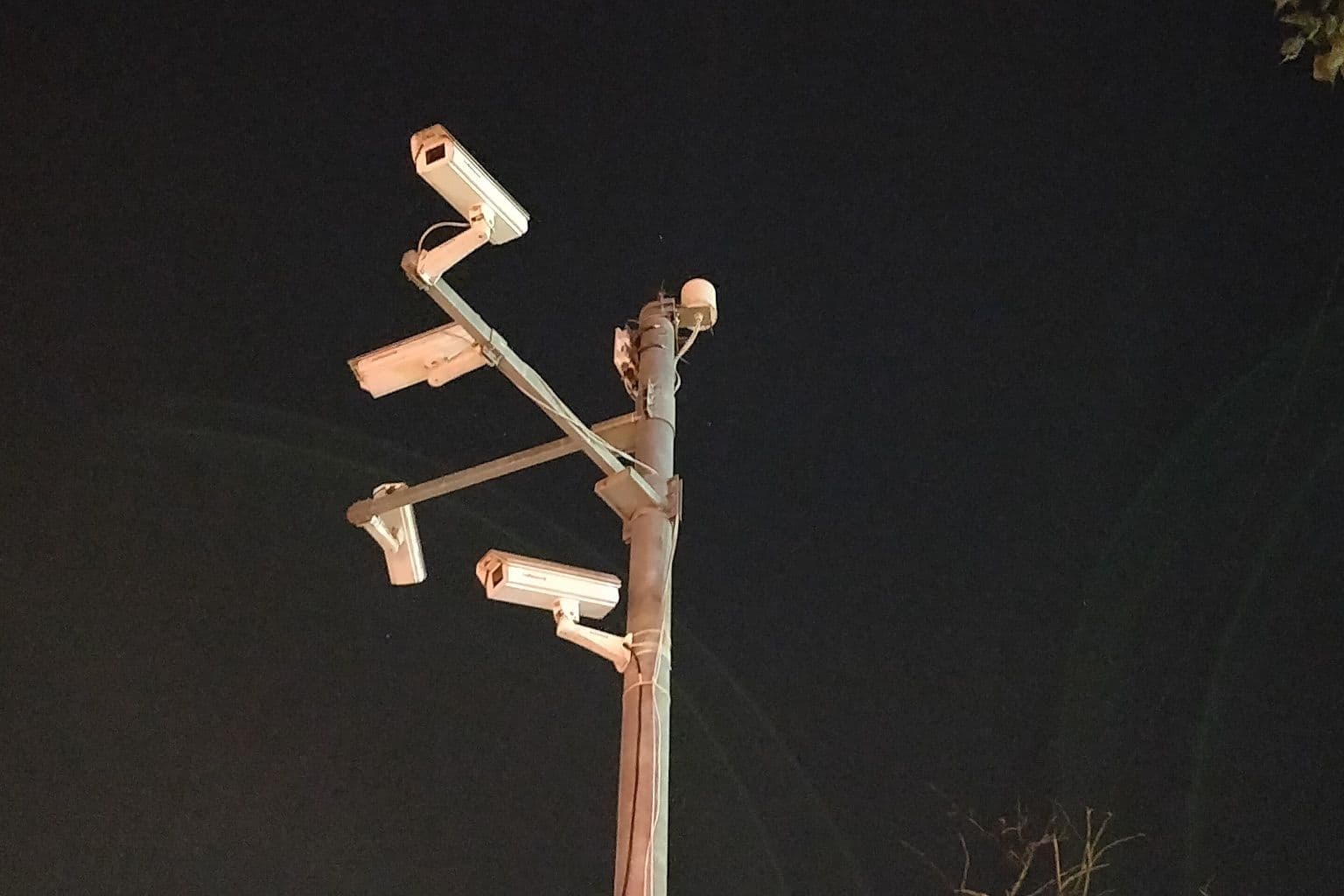
Cover photo: CCTV cameras in Mumbai, via Wikimedia Commons (CC0).